Parts UsedFully ripe fruit; healthy leaves only when intentionally gathered
Identification
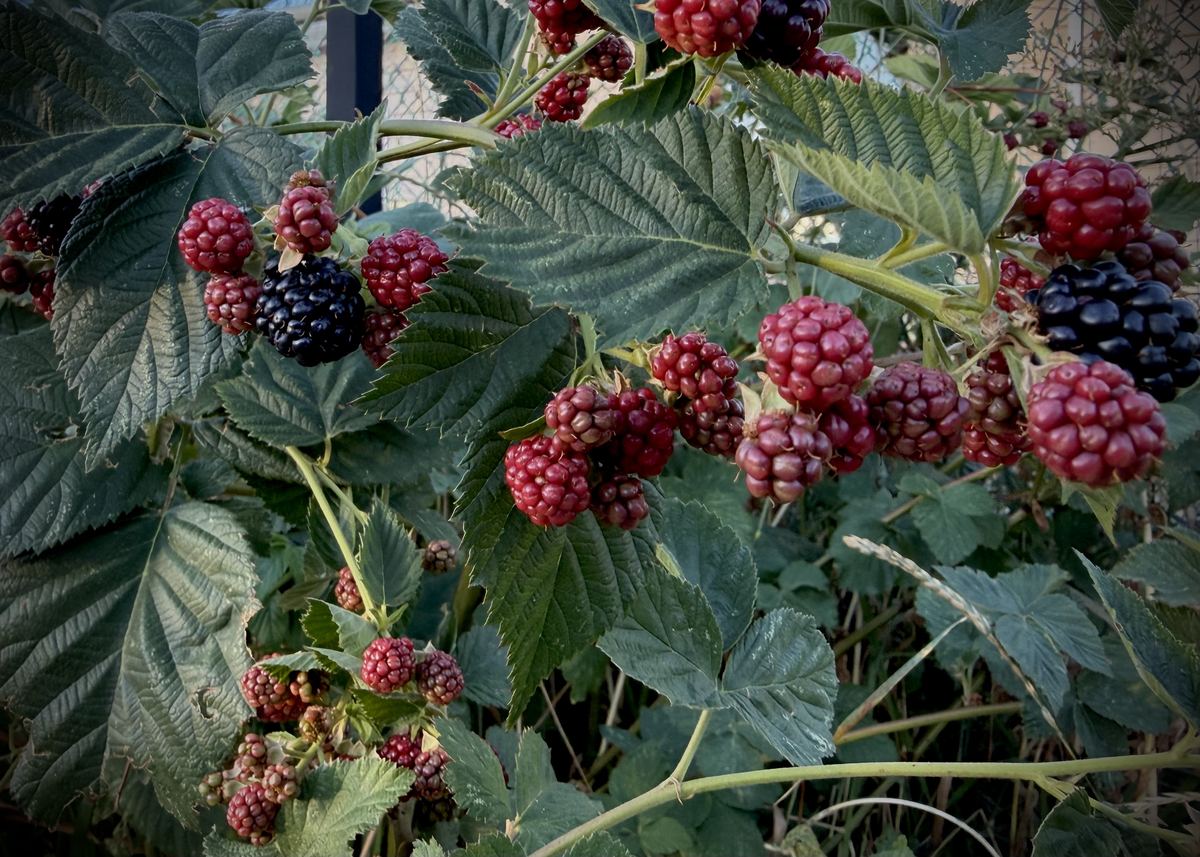
Canes: Arching brambles that may root where their tips touch soil; many cultivars carry stout prickles.
Leaves: Compound leaves, usually with three to five toothed leaflets.
Fruit: Dark purple-black aggregate berries that retain their pale receptacle when picked, unlike hollow raspberries.
Confirmation: Identify the plant across an entire season before gathering leaves; ornamental brambles and wild hybrids can be confusing.
Habitat & Growing Conditions
Garden setting: A perennial fruiting bramble that produces best in full sun.
Soil: Prefers fertile, well-drained soil with steady moisture while fruit develops.
Growth: Long, thorny or thornless canes require support and annual pruning.
Benefits
Traditional astringent: Tannin-rich leaves have a long record of use for mild diarrhea and as a gargle for minor mouth or throat irritation.
Food value: Ripe fruit supplies fiber, vitamin C, and anthocyanin pigments as part of a varied diet.
Evidence limit: Most medicinal-leaf evidence is traditional, laboratory, or preclinical; good human trials are limited.
Traditional Medicinal Uses
A mild dried-leaf infusion has been used traditionally for short-lived digestive upset and as a cooled mouth or throat rinse. Its astringency comes largely from tannins.
Culinary Uses
Fully ripe berries may be eaten fresh or used in preserves, sauces, baked goods, and syrups. Cook and preserve fruit with tested food-safety methods.
Harvesting
Gather only healthy, unsprayed young leaves without stripping or weakening fruiting canes.
Wear gloves and long sleeves around prickled cultivars.
Pick berries only when fully colored and ripe; wash gently and refrigerate promptly.
Preparation & Preservation
Leaf infusion: Dry leaves fully, steep for a mild tea, and strain carefully.
Gargle: Cool an infusion completely and spit it out after use if it is intended only as a rinse.
Storage: Label dried leaves separately from raspberry leaf and keep them dry and airtight.
Safety & Cautions
Do not self-treat diarrhea accompanied by blood, black stool, high fever, severe pain, dehydration, recent antibiotic use, or prolonged symptoms.
Tannin-rich preparations may upset the stomach and could affect absorption of medicines or nutrients; avoid taking them at the same time as prescription drugs without professional advice.
Medicinal-use safety during pregnancy, breastfeeding, and childhood is not well established.
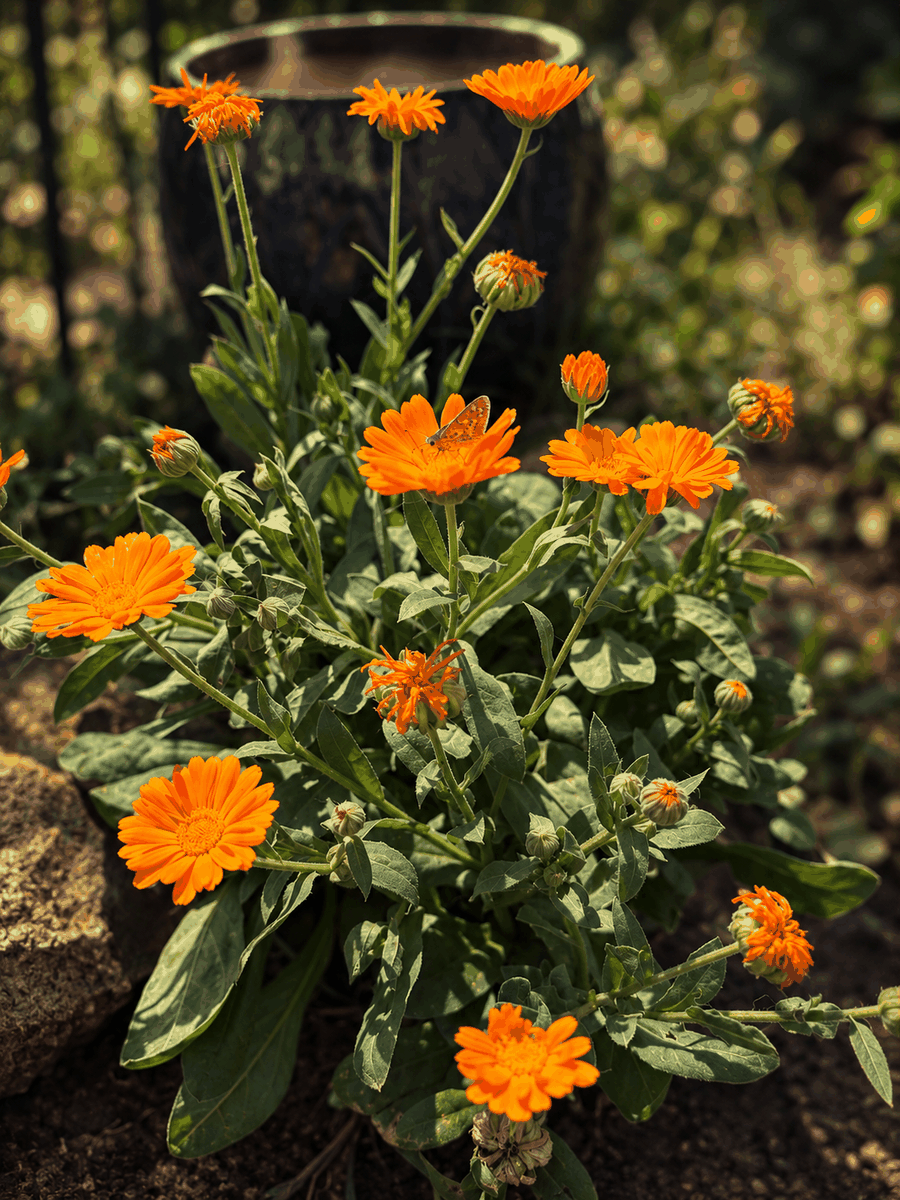
Calendula officinalis is an annual in the daisy family, Asteraceae. Plants usually form branching clumps of slightly sticky, aromatic, oblong to lance-shaped green leaves. Flower heads are typically bright yellow, gold, or orange with many ray florets surrounding a central disk. The curved, irregular seeds are distinctive and often resemble small hooks or curled crescents. Calendula should not be confused with Tagetes species, the plants commonly called French or African marigolds.
Habitat & Growing Conditions
Calendula is native to the Mediterranean region but is now widely cultivated in temperate gardens. It prefers full sun, though it tolerates partial shade, and grows best in fertile, well-drained soil with moderate moisture. It favors cool to mild temperatures and may slow or stop flowering during intense summer heat before reblooming as temperatures cool.
Benefits
Calendula is valued as a versatile garden and apothecary plant. Its flowers have a long history of topical use for soothing minor skin irritation and supporting the care of dry or chapped skin. The petals are edible, attract beneficial insects and pollinators, provide natural color in foods and crafts, and dry well for year-round preparations.
Traditional Medicinal Uses
Calendula flowers have traditionally been used externally in washes, compresses, infused oils, creams, and salves for minor skin irritation, superficial wounds, chafing, and dry or inflamed skin. Herbal traditions also use calendula as a mild tea or gargle. Modern herbal references most consistently support its traditional topical use rather than treating it as a substitute for medical wound care. Preparations should be used only on clean, minor skin concerns and not on deep, infected, or serious wounds.
Culinary Uses
Unsprayed calendula petals are edible in normal food amounts. Fresh or dried petals can be scattered over salads, soups, rice, eggs, breads, cakes, and other dishes. They may also be used to add golden color to butter, cheese, tea blends, infused vinegar, or decorative salts and sugars. The flavor is mild, slightly peppery, and sometimes faintly bitter.
Folklore & Magical Associations
In European folk and modern magical traditions, calendula is associated with the sun, warmth, joy, protection, healing, success, confidence, and divination. The golden flowers are commonly used in solar workings, protection charms, healing sachets, altar offerings, dream work, and rituals intended to bring optimism or clarity. Folklore practices vary by tradition and are best recorded as cultural or spiritual associations rather than medical effects.
Harvesting
Harvest fully opened flower heads on a dry morning after the dew has evaporated. Choose clean, healthy, unsprayed flowers. Pinch or snip the heads just below the flower base. Frequent harvesting also encourages the plant to continue producing blooms.
Preparation & Preservation
For dried flowers, separate clean petals or dry whole flower heads until fully crisp. For tea, use dried petals or flower heads in hot water. For topical preparations, dried calendula is commonly infused into a carrier oil and then used as-is or incorporated into salves and balms. Label every preparation with the plant, part used, date, and intended use.
Safety & Cautions
Calendula belongs to the Asteraceae family. People with known allergies to ragweed, chrysanthemums, daisies, or related plants may also react to calendula. Stop use if redness, itching, swelling, or other irritation develops. Use only correctly identified Calendula officinalis and avoid flowers treated with pesticides or other chemicals when preparing food or herbal products. Do not use home preparations as a replacement for professional care of deep wounds, severe burns, spreading redness, pus, fever, or other signs of infection. Internal medicinal use during pregnancy or breastfeeding should be discussed with a qualified healthcare professional because safety data are limited.
My Notes
Calendula is one of the most useful crossover plants in the Root & Brass garden because the same flowers can move from the garden into the kitchen, harvest shelves, apothecary, and grimoire. Record bloom color, harvest dates, drying results, infused-oil batches, recipes, skin preparations, and any especially successful self-seeding from year to year.
Sources & References
European Medicines Agency (EMA), Calendula officinalis L., flos herbal monograph.
World Health Organization, WHO Monographs on Selected Medicinal Plants: Flos Calendulae.
Royal Botanic Gardens, Kew, Plants of the World Online: Calendula officinalis L.
Missouri Botanical Garden Plant Finder: Calendula officinalis.
The Plant Cabinet
❧
California Poppy
Eschscholzia californica
Also known as California Poppy, Golden Poppy
✦
Plant TypeAnnual or short lived perennial wildflower
Parts UsedAerial parts, especially leaves and flowering tops, in traditional Western herbal preparations
Identification
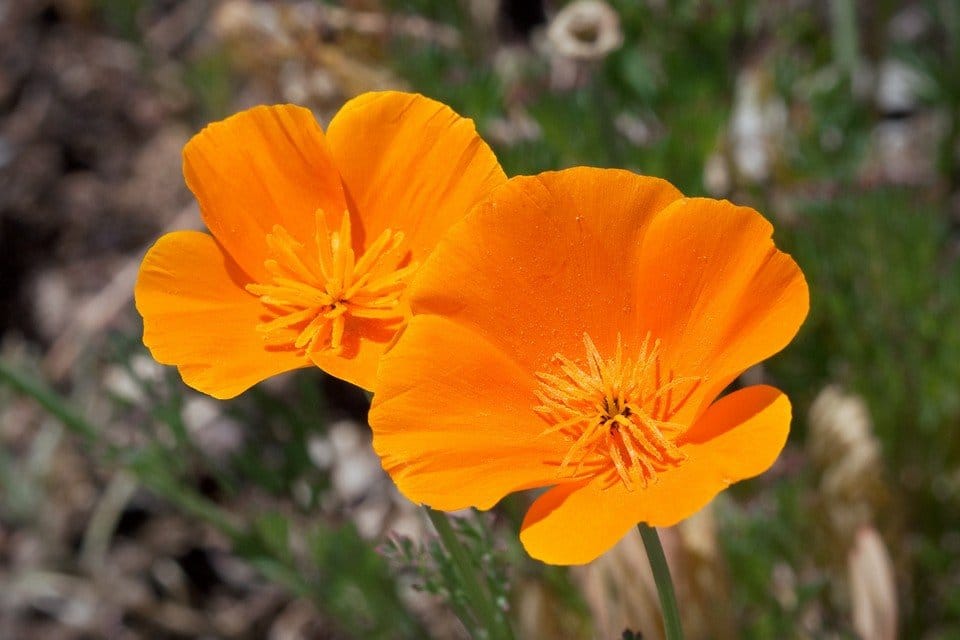
California poppy has finely divided blue-green foliage and solitary cup-shaped flowers, most often orange to golden yellow, on slender stems. Flowers typically close at night and during cool or cloudy weather. The elongated seed capsules are another useful identifying feature.
Habitat & Growing Conditions
Native to western North America and commonly found in sunny open ground, grasslands, roadsides, slopes, and disturbed areas. It prefers well-drained soil and is notably drought tolerant once established.
Benefits
California poppy is valued as a drought-tolerant ornamental and pollinator plant and has a documented history in traditional and Western herbal practice. Research has examined its alkaloids and possible calming effects, but evidence for homemade preparations is limited and should not be treated as proof of effectiveness.
Traditional Medicinal Uses
California poppy has traditionally been used as a mild calming herb for restlessness and sleep support. Some herbal preparations combine it with other sedating plants. This record documents traditional use rather than recommending treatment, because clinical evidence, standardized dosing, and long-term safety information are limited.
Culinary Uses
This plant is not kept in the Root & Brass Apothecary as a routine food plant. Historical uses of particular parts exist, but alkaloid content and preparation matter, so casual culinary use is not recommended here.
Folklore & Magical Associations
In modern folk and magical practice, California poppy is associated with sleep, dreams, peace, renewal, sunlight, resilience, and letting go of worry. Its habit of opening with light and closing in darkness lends itself symbolically to cycles of waking, rest, and return. These are folkloric associations rather than medical effects.
Harvesting
For an accurately identified plant, traditional herbal practice generally gathers healthy aerial parts during flowering. Harvest only from unsprayed plants away from roadsides and contaminated ground. Leave ample flowers and seed capsules for pollinators and natural reseeding.
Preparation & Preservation
Historical and modern herbal references describe dried-herb infusions, tinctures, and standardized preparations. Because strength varies and the plant contains active alkaloids, this Apothecary record does not provide a medicinal dose or concentrated home-preparation recipe.
Safety & Cautions
California poppy can cause drowsiness and should not be combined casually with alcohol, sedatives, sleep medicines, or other substances that depress the central nervous system. Avoid driving or operating machinery after medicinal use. Safety during pregnancy, breastfeeding, and childhood is not adequately established. Do not confuse California poppy with other members of the poppy family, and do not use this record as dosing guidance.
My Notes
Classified as a flower rather than a weed in this garden. Keep its Apothecary entry focused on identification, traditional use, symbolism, and safety rather than casual medicinal dosing.
Sources & References
Royal Botanic Gardens, Kew, Plants of the World Online: Eschscholzia californica. European Medicines Agency herbal assessment materials and pharmacognosy references discussing California poppy preparations. Regional extension and botanical references for identification and cultivation.
The Plant Cabinet
❧
Common Purslane
Portulaca oleracea
Also known as Little Hogweed, Purslane
✦
Plant TypeAnnual succulent
Parts UsedYoung leaves, tender stems, and aerial portions; seeds also have traditional food uses
Identification
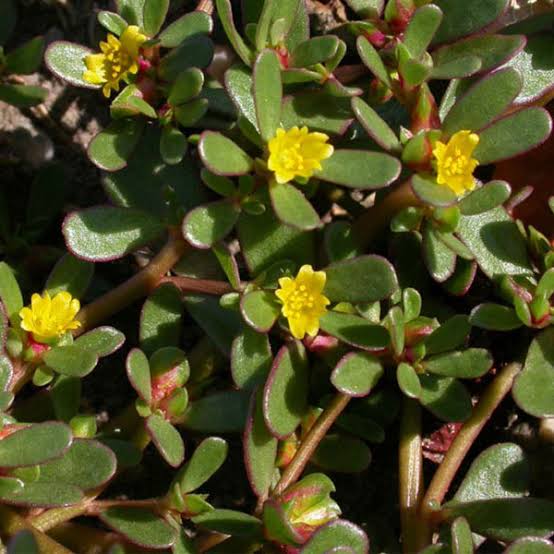
Purslane forms spreading mats with smooth, fleshy reddish or green-red stems. Leaves are thick, succulent, smooth-edged, and spoon- to wedge-shaped. Small yellow flowers usually have five petals and open in bright sunlight. Seed capsules contain many tiny dark seeds.
Habitat & Growing Conditions
Common purslane is a low-growing annual succulent that thrives in warm, sunny, disturbed ground. It commonly appears in gardens, paths, cracks, cultivated beds, roadsides, and other dry or compacted soils. It tolerates heat and drought exceptionally well but can also grow vigorously in fertile garden soil.
Benefits
Nutritious edible green containing alpha-linolenic acid (ALA), an omega-3 fatty acid uncommon at relatively high levels in leafy terrestrial plants.
Provides carotenoids and vitamins and minerals, with composition varying by growing conditions and plant maturity.
Contains flavonoids, alkaloids, organic acids, terpenoids, sterols, polysaccharides, and other phytochemicals studied for antioxidant and anti-inflammatory activity.
Has a long history as both food and traditional medicine in Mediterranean, Middle Eastern, Persian, Chinese, Ayurvedic, and other traditions.
Traditionally valued as a cooling, soothing plant and used for digestive, urinary, inflammatory, and skin complaints.
Laboratory, animal, and limited human research has investigated possible metabolic, gastroprotective, liver-protective, kidney-protective, antimicrobial, antioxidant, and anti-inflammatory effects. These findings are promising but do not establish purslane as a treatment for those conditions.
Traditional Medicinal Uses
Purslane has an unusually broad ethnomedicinal history. Traditional records describe the aerial parts or juice as cooling, soothing, astringent, and mildly diuretic. Historical uses include diarrhea and dysentery, digestive irritation, urinary complaints, feverish or inflammatory conditions, minor skin irritation, sores, and other complaints.
Culinary Uses
Purslane is a traditional food plant with a crisp, succulent texture and pleasantly tart, slightly lemony flavor. Young leaves and tender stems may be eaten raw in salads, sandwiches, yogurt dishes, and herb mixtures or cooked in soups, stews, egg dishes, sautés, and vegetable preparations. Its natural mucilage can slightly thicken soups and stews. It is also traditionally pickled in some cuisines.
Folklore & Magical Associations
In later European folk-magic and modern herbal-magic traditions, purslane is commonly associated with protection, peace, sleep, happiness, love, and calming conflict. Some traditions place it near entrances or carry it as a protective herb; others associate its cooling nature with soothing anger or restoring emotional balance. These are folkloric and spiritual associations rather than medical effects.
Harvesting
Harvest young, tender leaves and stems from positively identified plants before they become tough or heavily seeded. Pick from clean areas that have not been treated with herbicides, pesticides, road chemicals, or contaminated runoff. Rinse thoroughly. For fresh culinary use, harvest shortly before eating. If collecting for an apothecary record, note the location and growing conditions because wild purslane readily colonizes disturbed and potentially contaminated ground.
Preparation & Preservation
Fresh purslane is best suited to culinary preparations and traditional fresh-plant applications. Wash it thoroughly and remove damaged or questionable material. It can be eaten raw or cooked as a vegetable.
Safety & Cautions
Correct identification is essential. Do not confuse purslane with prostrate or spotted spurge (Euphorbia species), which produces a characteristic milky latex and should not be eaten.
My Notes
Purslane is a useful example of a plant that can be both an unwanted garden weed and a valuable edible/apothecary species. Record where it volunteers, how aggressively it spreads, flavor and texture at different harvest stages, and whether harvested plants came from soil known to be free of herbicides and other contamination.
Sources & References
Iranshahy M, et al. A review of traditional uses, phytochemistry and pharmacology of Portulaca oleracea L. Journal of Ethnopharmacology. 2017;205:158-172. PMID 28495602.
The Plant Cabinet
❧
Coneflower
Echinacea spp.
Also known as Echinacea, Purple Coneflower
✦
Plant TypeHerbaceous perennial
Parts UsedSpecies-dependent; flowering aerial parts and/or roots
Identification
Flower head: A raised, firm, bristly central cone surrounded by drooping
or spreading ray petals.
Leaves: Usually rough-textured and lance- to oval-shaped, with visible
veins.
Stems: Upright and often slightly hairy.
Species note: Medicinal research most often involves E. purpurea, E.
angustifolia, or E. pallida. Confirm the exact species before applying
species-specific preparation advice.
Habitat & Growing Conditions
Garden setting: A hardy herbaceous perennial for full sun to light
shade.
Soil: Prefers well-drained soil and becomes drought-tolerant after
establishment.
Season: Flowers from midsummer into autumn and provides seed for birds
when heads remain standing.
Benefits
Respiratory research: Echinacea products may slightly reduce the chance
of catching a cold, but it remains unclear whether they shorten a cold once it
begins.
Traditional use: Several echinacea species have a long record of use for
upper-respiratory symptoms and topical wound care.
Evidence limit: Results depend on species, plant part, extraction
method, and product quality. A garden infusion is not equivalent to a
standardized extract used in research.
Traditional Medicinal Uses
Echinacea is most commonly recorded for short-term use around ordinary cold
symptoms. Modern evidence is mixed and does not support using it to treat
influenza, pneumonia, strep throat, or another serious infection.
Traditional topical use is also documented, but homemade preparations should
be limited to minor skin care and never placed into deep or infected wounds.
Harvesting
Harvest aerial portions only from confidently identified, unsprayed plants.
Taking roots kills or severely weakens the crown. Root harvest should be
limited to mature plants intentionally grown for that purpose.
Leave plenty of flower heads for pollinators, seed production, and winter
birds.
Preparation & Preservation
Record first: Confirm the echinacea species before choosing a plant part
or preparation.
Drying: Dry clean leaves, petals, and flower heads in a single layer
away from direct sun.
Product distinction: Do not copy doses from a commercial extract onto
homemade tea or tincture; their concentrations are not comparable.
Safety & Cautions
Echinacea can cause digestive upset and allergic reactions, occasionally
severe. Risk may be higher for people allergic to ragweed or other Asteraceae
plants.
Ask a clinician before use with autoimmune disease, an immune-system
disorder, organ transplantation, or medicines that suppress or alter immune
function.
Consult a pediatric clinician before giving echinacea to a child. Rashes and
potentially serious allergic reactions have been reported.
Pregnancy and breastfeeding safety data are limited. Do not use it as a
substitute for vaccination, testing, antiviral treatment, antibiotics, or
urgent respiratory care.
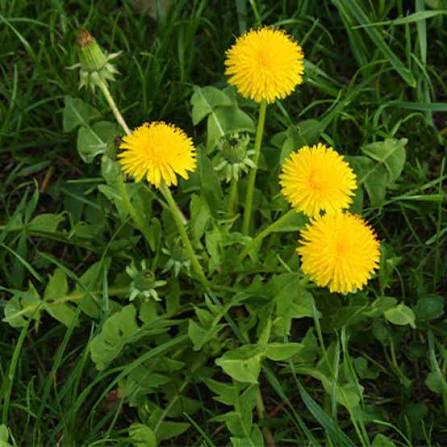
A basal rosette of deeply toothed leaves surrounds leafless hollow flower stalks. Each stalk carries one bright yellow composite flower head and exudes white milky latex when broken. Mature seed heads form the familiar round white “puffball” of parachute-like seeds. Confirm identification before harvest because other yellow-flowered members of the daisy family can appear similar at a glance.
Habitat & Growing Conditions
Common in lawns, gardens, roadsides, disturbed ground, compacted soils, and open sunny places throughout temperate regions. Dandelion tolerates a wide range of soil conditions and develops a substantial taproot.
Benefits
Dandelion is useful as an edible wild green in ordinary food amounts, an early nectar and pollen source, and a traditional herbal plant. Leaves, flowers, and roots have all been used in food and folk preparations. Laboratory research has explored antioxidant and anti-inflammatory activity, but strong clinical evidence for treating health conditions is lacking.
Traditional Medicinal Uses
Dandelion leaves, flowers, and roots have a long history in traditional herbal practice. Preparations have been used for digestive complaints and as a bitter digestive herb, while the leaves have also been used traditionally in diuretic preparations. Modern clinical evidence is limited, and dandelion should be recorded as a traditional-use herb rather than a proven treatment for disease.
Culinary Uses
Young leaves can be eaten raw or cooked and become more bitter as they mature. Flowers may be used in fritters, syrups, jellies, teas, and other traditional preparations. Clean roots have historically been roasted for a bitter coffee-like beverage. Harvest only correctly identified plants from areas free of herbicides, pesticides, road runoff, pet waste, and other contamination.
Folklore & Magical Associations
In folk and modern magical traditions, dandelion is commonly associated with wishes, divination, resilience, transformation, perseverance, solar energy, and communication. Seed heads are especially associated with wish-making and dispersing intentions. These are cultural and spiritual associations rather than medical effects.
Harvesting
Harvest young leaves before flowering when a milder flavor is wanted. Gather open flowers on a dry day after dew has evaporated. Roots are commonly dug when plants are well established, often in spring or fall. Use only unsprayed plants from clean ground and positively identify the species before using it internally.
Preparation & Preservation
Leaves may be washed and used fresh or dried for later use. Flowers can be used fresh or dried in a single layer with good airflow. Roots should be scrubbed thoroughly, sliced into smaller pieces, and dried completely before storage; dried root may also be roasted for culinary use. Label stored material with plant name, part, location, and harvest date.
Safety & Cautions
Dandelion in normal food amounts is generally considered likely safe, but safety of larger medicinal amounts is less certain. It belongs to the Asteraceae family, so people sensitive to ragweed, chrysanthemums, marigolds, daisies, or related plants may react. Dandelion may theoretically interact with medicines including diabetes drugs, anticoagulant or antiplatelet drugs, and diuretics. Safety of medicinal amounts during pregnancy and breastfeeding is not well established. Avoid harvesting from chemically treated or contaminated ground, and seek professional guidance before using concentrated preparations alongside medications or for a health condition.
My Notes
Keep dandelion in the Weeds group so it stays out of the ornamental Plant Journal while remaining available in the Apothecary. Record where it grows, whether the area has ever been treated, and which plant parts are harvested.
Sources & References
National Center for Complementary and Integrative Health (NCCIH), Dandelion: Usefulness and Safety.
Royal Botanic Gardens, Kew, Plants of the World Online: Taraxacum officinale.
The Plant Cabinet
❧
Frost Peach
Prunus persica 'Frost'
Also known as Frost Peach
✦
Plant TypeDeciduous fruit tree
Parts UsedRipe fruit flesh; remove and discard the pit
Identification
A small deciduous tree with long, narrow, finely toothed leaves and pink spring blossoms. The summer fruit is round and softly fuzzy, ripening to yellow flesh beneath blushed skin. Confirm the garden label and fruit before use; this record is specifically for the cultivated Frost peach.
Habitat & Growing Conditions
A cold-hardy deciduous fruit tree grown in full sun with well-drained soil and consistent moisture while fruit develops. This cultivated peach belongs in the food-first side of the apothecary rather than the home-remedy cabinet.
Benefits
The ripe peach flesh is a nourishing seasonal food. It provides water, dietary fiber, vitamin C, potassium, and naturally occurring carotenoid and polyphenol plant compounds. These nutrients support an overall varied diet, but the fruit should not be presented as a treatment or cure for disease.
Traditional Medicinal Uses
Peach flowers, leaves, bark, and kernels appear in historical and traditional materia medica. Those uses are recorded here for ethnobotanical context only: reliable human evidence is limited, and the tree’s non-fruit tissues can contain cyanogenic compounds. Root & Brass does not recommend homemade peach-leaf, bark, twig, pit, or kernel remedies.
Culinary Uses
Use ripe, sound flesh fresh or cooked. Peaches are suited to baking, sauces, preserves, drying, and freezing. Remove and discard the pit before serving or preserving. For shelf-stable canning, follow a current tested recipe rather than improvising processing times or acidification.
Harvesting
Harvest when the green background color has turned creamy yellow, the fruit smells fragrant, yields slightly near the stem, and releases with a gentle twist. Pick into a shallow basket and handle carefully to prevent bruising. Leave damaged, moldy, or fermented fruit out of preparations.
Preparation & Preservation
Wash under cool running water, cut around the stone, twist the halves apart, and remove the pit. Eat promptly, refrigerate, dry, cook, or freeze using a tested food-preservation method. See the Root & Brass Harvest & Use guide for the garden’s drying, freezing, and infusing framework; peach is listed here for fruit preparations, not medicinal infusions from leaves or bark.
Safety & Cautions
Peach pits and kernels, leaves, bark, and twigs can contain cyanogenic glycosides that may release toxic cyanide. Never chew or eat the kernel inside a cracked pit, and do not make tea, tincture, syrup, extract, or “vitamin B17”/amygdalin remedies from these tissues. Keep pits and prunings away from children, pets, and livestock. Peach can also cause food allergy or pollen-related oral allergy symptoms; stop eating it and seek urgent help for trouble breathing, throat swelling, faintness, or a rapidly spreading reaction. Whole or broken pits are a choking hazard. This record is educational and is not medical advice.
Parts UsedFresh leaves, traditionally for external use
Identification
Rosettes: Tight clusters of pointed, fleshy leaves, often green with red
or burgundy tips.
Offsets: Smaller rosettes form on short runners around the parent plant.
Flowers: Star-shaped pink to reddish flowers rise on a thick stalk from
a mature rosette.
Look-alikes: Confirm Sempervivum rather than an indoor Echeveria,
Aeonium, or another ornamental succulent before recording traditional use.
Habitat & Growing Conditions
Garden setting: A cold-hardy evergreen succulent for full sun to light
shade.
Soil: Requires gritty, sharply drained soil and very little supplemental
water.
Growth: The central “hen” produces offset “chicks”; a mature rosette
flowers once and then dies after setting seed.
Benefits
Topical tradition: Fresh houseleek juice has been used traditionally for
minor burns, insect bites, skin irritation, and ear discomfort.
Preclinical research: Laboratory and animal studies report
anti-inflammatory, pain-relieving, and wound-healing activity.
Evidence limit: These findings do not establish effectiveness or safe
dosing in people, especially inside the ear or on broken skin.
Traditional Medicinal Uses
Hens & Chicks belongs in the cabinet as a traditional topical plant and
research subject. Its cool leaf juice has historically been compared with aloe
for minor external irritation.
Earache traditions are recorded for history only. Plant juice must not be
placed into the ear canal because pain can reflect infection, a foreign
object, or a ruptured eardrum.
Harvesting
Take a single clean outer leaf from a healthy, positively identified,
unsprayed rosette.
Avoid leaves with rot, fungal spotting, pest damage, or soil contamination.
Do not overharvest a small rosette or a plant preparing to flower.
Preparation & Preservation
Patch test only: Wash a leaf, split it, and test a small amount of fresh
juice on a tiny area of intact skin.
Make fresh preparations only and discard leftovers; succulent juice is
water-rich and spoils quickly.
Do not can, bottle, tincture, or preserve fresh juice without a validated
formulation.
Safety & Cautions
Do not put houseleek juice into the eyes, nose, mouth, or ear canal, and
never use it when a ruptured eardrum is possible.
Do not apply it to deep, infected, puncture, surgical, or serious burn
wounds. Seek medical care for blistering burns, facial or hand burns,
spreading redness, pus, fever, or worsening pain.
Stop use for burning, rash, swelling, or other irritation. Safety of
internal medicinal use, pregnancy, breastfeeding, and pediatric use is not
established.
Parts UsedFlowers and leaves; roots are also recorded in historical herbal use
Identification
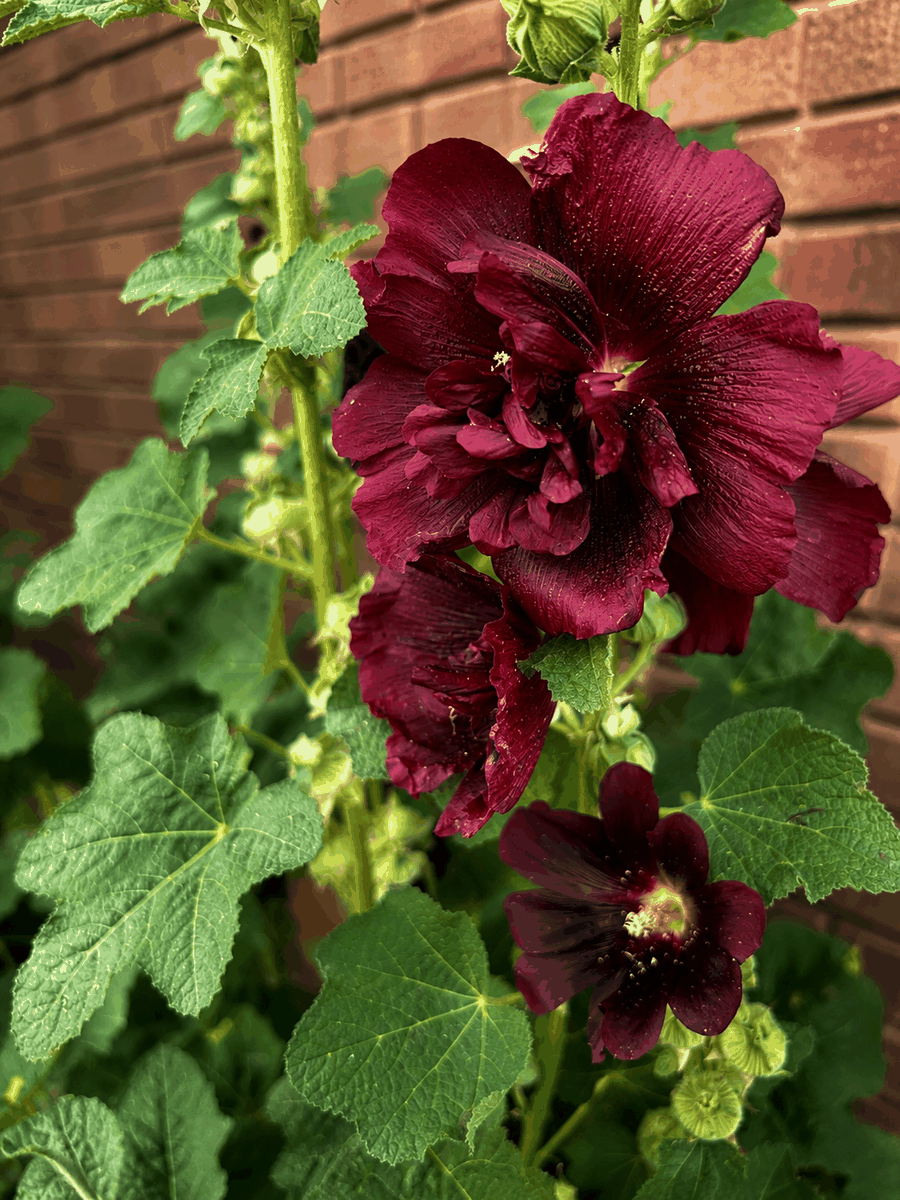
Hollyhock forms a basal clump of broad, rounded to heart-shaped leaves with shallow lobes and a softly rough texture. Mature plants send up tall upright flower stalks, often 4 to 8 feet or more, lined with large single or double flowers in colors ranging from white and yellow to pink, red, purple, and nearly black. Flowers have the classic mallow-family form with five petals in single-flowered types and a prominent central staminal column. Round, flattened seed pods develop after bloom. Confirm the plant as Alcea rosea rather than assuming every mallow-family ornamental has the same traditional uses.
Habitat & Growing Conditions
Hollyhock prefers full sun, good air circulation, and fertile, well-drained soil. It often behaves as a biennial or short-lived perennial but readily reseeds where conditions suit it. Tall flowering stalks may need staking in windy locations. Water at the soil line rather than over the leaves because crowded, damp foliage encourages hollyhock rust.
Benefits
Hollyhock contains mucilaginous compounds, especially in the flowers, leaves, and roots. In traditional herbal practice, mucilage-rich plants were valued for coating and soothing irritated tissues. Hollyhock has therefore been recorded historically for dry throat, cough, digestive irritation, and external skin comfort. These uses are based mainly on traditional practice and related mallow-family chemistry rather than strong modern clinical trials specifically on Alcea rosea.
Traditional Medicinal Uses
Traditional herbal records describe hollyhock flowers, leaves, and roots as soothing demulcent materials. Water-based preparations were historically used for dry or irritated throat, cough, and digestive discomfort, while cooled preparations were sometimes applied externally to irritated skin. Modern evidence specifically supporting hollyhock as a treatment is limited, so these should be treated as historical and traditional uses rather than established medical therapy.
Culinary Uses
Clean, unsprayed petals are sometimes used as an edible garnish, and young leaves have historical food use in some traditions. Only use plant material that is positively identified and has not been treated with ornamental pesticides or systemic chemicals. Culinary use is separate from medicinal-dose use.
Folklore & Magical Associations
Hollyhock is commonly associated in modern folk and garden magic with protection of the home, abundance, resilience, ambition, growth, and the strength to stand tall through difficult conditions. Because it often grows beside houses, fences, and gates, it is also used symbolically for household guardianship and boundary protection. Its tall flowering stalks make it a natural emblem of aspiration and persistence. These are folkloric and spiritual associations, not medical effects.
Harvesting
Gather only clean, unsprayed flowers and healthy young leaves from positively identified hollyhocks. Pick flowers after dew has dried and before they begin to fade. Leave plenty of flowers for pollinators and seed production. Avoid leaves affected by rust, mildew, insects, or chemical spray. If gathering seed for the garden, allow pods to dry fully on the stalk before collecting.
Preparation & Preservation
Flowers and leaves may be dried in a single layer in a shaded, well-ventilated place until completely crisp, then stored in a labeled airtight container away from heat and moisture. Traditional soothing preparations generally relied on water-based infusions or decoctions to extract the plant’s mucilage. This record does not provide medicinal dosing. Do not use moldy, rust-damaged, or chemically treated plant material.
Safety & Cautions
Correct identification matters because the mallow family includes many related species and traditional uses are not automatically interchangeable. Use only unsprayed garden material; ornamental plants may have been treated with pesticides not intended for food or medicinal use. Hollyhock rust is extremely common, and diseased leaves should not be harvested. Mucilage-rich herbs may theoretically slow absorption of oral medicines, so separate medicinal preparations from prescription drugs unless a qualified healthcare professional advises otherwise. Safety of medicinal-dose use during pregnancy, breastfeeding, and childhood is not well established. Seek appropriate medical care for persistent cough, trouble breathing, significant throat swelling, severe abdominal pain, bleeding, fever, or worsening symptoms.
My Notes
Hollyhocks have been part of the Root & Brass garden since about 2019. They have been moved around the property, allowed to reseed, and deliberately spread by collected seed.
Sources & References
Royal Horticultural Society — Hollyhock (Alcea rosea) cultivation and garden care.
NC State Extension — Alcea rosea identification, growth habit, and ornamental characteristics.
Plants For A Future — historical food and herbal uses recorded for Alcea rosea.
General mallow-family herbal literature describing mucilage-rich demulcent plants; hollyhock-specific modern clinical evidence remains limited.
The Plant Cabinet
❧
Honeysuckle
Lonicera periclymenum
Also known as Common Honeysuckle, European Honeysuckle, Woodbine
✦
Plant TypeDeciduous perennial vine
Parts UsedClean blossoms for botanical observation, fragrant display, or non-ingestible drying
Identification
A twining vine—not a bush honeysuckle—with opposite, oval to elliptic leaves and terminal clusters of long, two-lipped tubular flowers. Buds may be pink or reddish before opening creamy white to yellow, and the flowers become strongly fragrant in the evening. Lonicera periclymenum can form glossy red berries, but the Root & Brass vine has not produced berries. Confirm this species rather than relying on the common name “honeysuckle,” which is shared by many Lonicera species with different chemistry and safety.
Habitat & Growing Conditions
A deciduous perennial vine suited to woodland edges, hedgerows, fences, and trellises. It grows in full sun to partial shade with evenly moist, well-drained soil, often flowering best when its roots stay cool and its upper growth reaches the light.
Benefits
The fragrant flowers provide nectar for moths, bees, and other pollinators and bring a calming sensory presence to the evening garden. Laboratory research has identified antioxidant compounds in Lonicera periclymenum, but this does not establish a safe dose or prove that a homemade preparation treats disease.
Traditional Medicinal Uses
Leaves and flowers of Lonicera periclymenum have been recorded in folk practice for coughs and respiratory complaints. Much of the better-known medicinal literature on “honeysuckle” concerns a different species, Lonicera japonica, used in traditional Chinese medicine. Those uses and preparations must not be transferred to this garden vine. Root & Brass records the history but does not recommend homemade internal remedies from this plant.
Culinary Uses
No household culinary use is recommended in this record. The Root & Brass vine has not produced berries; if berries ever develop, they are ornamental and should not be eaten. Although some references describe carefully identified honeysuckle flowers as edible, species confusion is common and does not make the rest of the plant safe.
Harvesting
For a pressed specimen or fragrant display, gather a small cluster of newly opened, unsprayed flowers after dew has dried. Leave plenty for pollinators and avoid diseased, moldy, roadside, or chemically treated material. Do not harvest berries for food, syrup, tincture, or medicine.
Preparation & Preservation
Enjoy the flowers on the living vine, press a specimen for the journal, or air-dry a small amount for a non-ingestible botanical display. Keep dried material clearly labeled and separate from culinary herbs. Do not make honeysuckle tea, infused honey, syrup, tincture, oil, or salve from this plant for medicinal use.
Safety & Cautions
This Root & Brass plant is a honeysuckle vine and has not produced berries. If Lonicera periclymenum berries ever develop, they are ornamental and not to be eaten; ingestion can cause gastrointestinal illness. Keep berries and harvested material away from children and pets. Do not assume that a preparation made from Lonicera japonica or another medicinal honeysuckle is suitable for this species. Avoid internal medicinal use during pregnancy, breastfeeding, childhood, or alongside medication because safe dosing and interactions are not established. If any part is swallowed and symptoms develop, contact Poison Control in the United States at 1-800-222-1222; call emergency services for collapse, seizure, trouble breathing, or inability to wake. This record is educational and is not medical advice.
My Notes
The Root & Brass specimen is a twining honeysuckle vine, not a bush honeysuckle. It has not produced berries in the garden.
Also known as Lady's Thumb, Spotted Lady's Thumb, Redshank, Spotted Smartweed
✦
Plant TypeAnnual broadleaf weed
Parts UsedLeaves and aerial parts in traditional practice
Identification
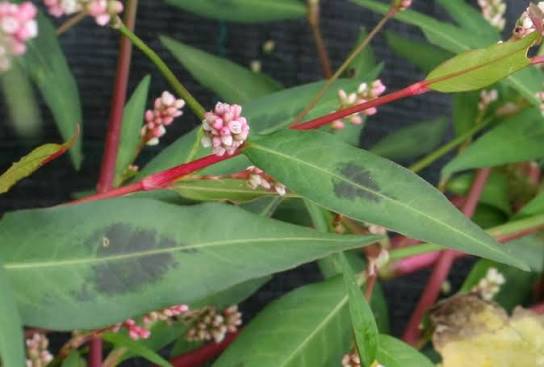
Annual smartweed with slender branching stems, alternate lance-shaped leaves, and small pink to rose flowers packed into narrow upright spikes. Many leaves show a dark purplish or brown thumbprint-like blotch near the center, although the marking can be faint or absent. A papery sheath called an ocrea surrounds the stem at each leaf node and helps distinguish Persicaria species. The garden identification was made from a photograph and should be confirmed from the leaf nodes and other diagnostic features before edible or medicinal use.
Habitat & Growing Conditions
Common in disturbed ground, gardens, field edges, roadsides, paths, waste places, and moist cultivated soil. It tolerates a range of conditions but often grows especially well where soil has been disturbed and moisture is available.
Benefits
Lady’s Thumb has a long history as a folk herb and also provides ecological value as a flowering volunteer plant. Persicaria species contain a variety of plant compounds, including phenolics and flavonoids, that have been investigated for antioxidant and other biological activity. Laboratory findings do not establish Lady’s Thumb as a treatment for disease, so this record keeps traditional use separate from modern clinical evidence.
Traditional Medicinal Uses
Traditional and ethnobotanical accounts describe Lady’s Thumb and related smartweeds being used in preparations for digestive complaints, minor diarrhea, irritated tissues, and as external washes or poultices for minor skin concerns. Some traditions also record astringent and diuretic uses. Modern human clinical evidence for Persicaria maculosa is limited, so these uses are recorded as historical and traditional rather than proven medical treatments.
Culinary Uses
Young leaves of positively identified Lady’s Thumb have been eaten as a cooked or raw wild green in some traditions. The flavor may be mild to peppery depending on the plant and growing conditions. Because smartweed species can be confused and may contain oxalates or other irritating compounds, identification should be certain and use should be moderate. Avoid harvesting from treated lawns, roadsides, contaminated soil, or other polluted areas.
Folklore & Magical Associations
In modern folk and magical practice, smartweeds and Lady’s Thumb may be associated with resilience, protection, boundaries, persistence, and adapting to difficult ground. The distinctive dark leaf mark lends itself symbolically to themes of marks, signatures, memory, and personal protection. These are folkloric and modern magical associations rather than medical claims.
Harvesting
If positively identified, gather clean young leaves or flowering aerial parts during active growth. Choose healthy plants away from herbicides, pesticides, roadsides, pet areas, and contaminated ground. Leave enough flowering plants to support insects and seed production if the plant is being intentionally retained.
Preparation & Preservation
Historical preparations include fresh or dried aerial parts used as infusions, washes, and poultices. Young leaves have also been used as food. For the home Apothecary, drying clean aerial parts in a well-ventilated shaded location is the simplest preservation method. Store fully dried material in a labeled airtight container away from heat, moisture, and direct light. Do not make concentrated medicinal preparations without reliable species identification and appropriate safety guidance.
Safety & Cautions
Confirm identification before eating or using medicinally because Persicaria and related knotweed-family plants can be difficult to distinguish. Members of the Polygonaceae family may contain oxalates; people with a history of calcium-oxalate kidney stones or conditions requiring oxalate restriction should be particularly cautious. Avoid medicinal use during pregnancy or breastfeeding because adequate safety information is lacking. Allergic or gastrointestinal reactions are possible. Traditional use does not establish safety or effectiveness for treating a medical condition.
My Notes
Growing voluntarily on the property and classified as a weed here. The photographed plant showed the characteristic pink flower spikes and lance-shaped foliage. Keep as an Apothecary and ethnobotanical record, with final species confirmation recommended before any edible or medicinal use.
Sources & References
USDA PLANTS and regional botanical references for Persicaria maculosa identification and distribution. Ethnobotanical references document traditional uses of Persicaria and related smartweed species. Modern phytochemical studies of Persicaria species report phenolic, flavonoid, antioxidant, and other biological activity, but species-specific human clinical evidence for Lady’s Thumb remains limited.
The Plant Cabinet
❧
Lavender
Lavandula angustifolia
Also known as English Lavender, True Lavender
✦
Plant TypeWoody perennial herb
Parts UsedFlower spikes and aromatic leaves
Identification
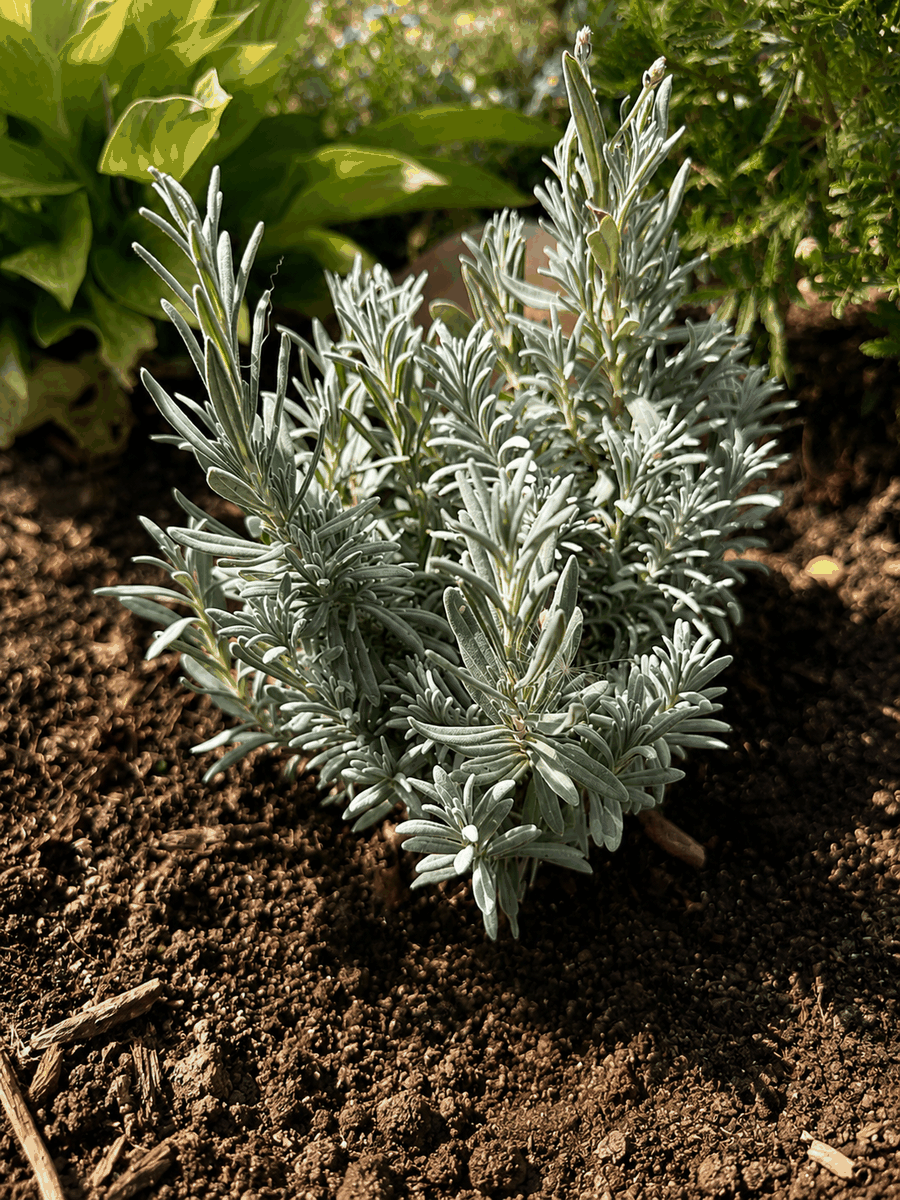
English lavender forms a compact woody mound with narrow, linear gray-green leaves arranged oppositely on the stems. Upright stalks carry terminal spikes of small purple to violet flowers. The entire plant is strongly aromatic when rubbed. Confirm Lavandula angustifolia before culinary or medicinal use because other lavender species and hybrids differ in chemistry and flavor.
Habitat & Growing Conditions
Lavender is a sun-loving Mediterranean perennial adapted to dry, open conditions. It performs best in full sun, lean to moderately fertile soil, excellent drainage, and good air circulation. Established plants tolerate drought better than wet roots and winter waterlogging.
Benefits
Lavender is traditionally valued for its calming fragrance and aromatic household use. Research on lavender preparations suggests possible benefit for anxiety or sleep in some settings, but results depend on the product and route of use. Garden flowers, tea, aromatherapy products, and standardized oral lavender-oil preparations are not interchangeable.
Traditional Medicinal Uses
Lavender has a long tradition of use in aromatic preparations for relaxation, mild restlessness, and sleep support, as well as topical preparations for minor skin comfort. Evidence is strongest for certain standardized products rather than homemade remedies, so this garden record keeps traditional use separate from proven treatment.
Culinary Uses
English lavender flowers can be used sparingly in baked goods, teas, infused sugar, syrups, honey, and savory herb blends. Use only correctly identified, unsprayed culinary lavender. A small amount is usually enough.
Folklore & Magical Associations
Lavender is traditionally associated with peace, purification, protection, love, sleep, healing, and calm. In contemporary magical practice it is often used in sachets, cleansing blends, dream or sleep work, altar arrangements, and household protection. These are spiritual and folkloric associations rather than medical effects.
Harvesting
Cut flower stems on a dry morning after dew has evaporated, just as the first flowers on a spike begin to open. Leave enough bloom for pollinators and avoid wet, damaged, or chemically treated material.
Preparation & Preservation
For dried lavender, strip fully dry buds from the stems and store airtight away from light and moisture. For culinary use, use Lavandula angustifolia sparingly because the flavor becomes bitter or soapy when overused. Essential oil is highly concentrated and is not equivalent to flower tea or culinary buds.
Safety & Cautions
Lavender can cause skin irritation or allergic reactions in some people. Essential oil is highly concentrated and should not be swallowed or applied undiluted. Keep concentrated oils away from the eyes and from young children. Lavender may add to drowsiness when combined with sedating medicines or substances. Safety of medicinal-dose use during pregnancy and breastfeeding is not well established. Culinary quantities of correctly identified lavender are different from concentrated extracts or essential oils.
My Notes
Lavender connects the garden, kitchen, harvest shelves, and grimoire especially well: it is beautiful alive, useful dried, strongly fragrant, culinary in small amounts, and rich in traditional symbolism.
Parts UsedLeaves and flowers primarily; young shoots and immature seeds are edible in some Malva species
Identification
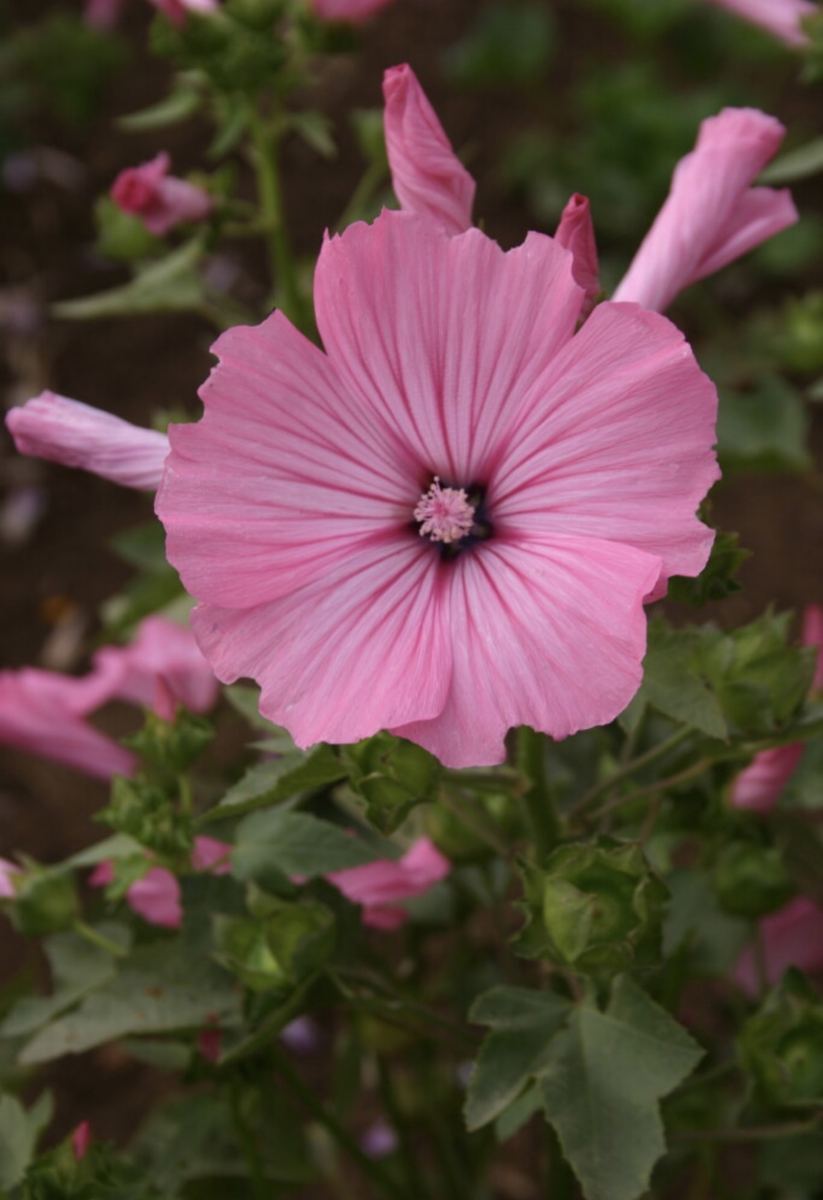
Mallows generally have rounded to kidney-shaped or shallowly lobed leaves with palmate veins, soft stems, and five-petaled flowers in shades of pink, lavender, purple, or white. The flattened circular fruits are often described as resembling tiny cheese wheels. Because this record is Malva spp., confirm the exact species before medicinal or edible use.
Habitat & Growing Conditions
Malva species commonly grow in gardens, fields, roadsides, disturbed ground, waste places, and other sunny to partly shaded sites. Many tolerate compacted or moderately dry soil once established.
Benefits
Many Malva species contain abundant mucilage, a slippery plant fiber that accounts for much of their traditional soothing use. Mallows also provide flowers for pollinators and, when positively identified, several species have edible young leaves, flowers, and immature fruits.
Traditional Medicinal Uses
Traditional herbal use of Malva species centers on their mucilage-rich leaves and flowers. Infusions have historically been used to soothe irritated mouth and throat tissues and for mild digestive irritation, while external preparations have been used on dry or irritated skin. Species-specific clinical evidence is limited, so these uses are recorded as traditional rather than proven treatments.
Culinary Uses
Young leaves, flowers, tender shoots, and immature fruits of several correctly identified Malva species have been eaten. Leaves may be cooked as greens or used to thicken soups because of their mucilage. Use only a positively identified species from clean, unsprayed ground.
Folklore & Magical Associations
In folk and modern magical traditions, mallow is associated with gentleness, soothing conflict, love, protection, healing, emotional softness, and peaceful domestic energy. These associations are spiritual and folkloric rather than medical claims.
Harvesting
Gather young clean leaves before they become tough and flowers when freshly opened. Harvest only from positively identified, unsprayed plants away from roadsides, animal waste, and contaminated soil. Leave enough flowers for pollinators and seed production.
Preparation & Preservation
Leaves and flowers may be dried in a single layer with good airflow for later infusion. Mucilage extracts well in water; traditional preparations include warm or cool infusions and external washes or poultices. For food, young leaves are commonly cooked like other greens. Label stored material with the exact species whenever possible.
Safety & Cautions
Confirm the exact Malva species before use. Mallow is generally regarded as a mild food and traditional herb when correctly identified, but individual allergy or digestive sensitivity is possible. Its mucilage may theoretically alter absorption of oral medicines if taken at the same time, so separating medicinal mallow preparations from medications is prudent. Safety of medicinal-dose use during pregnancy and breastfeeding is not well established.
My Notes
Mallow is classified as a flower rather than a weed in this garden. Keep notes on the exact species, flower color, growth habit, and where it volunteers so the identification can eventually be narrowed beyond Malva spp.
Sources & References
Royal Botanic Gardens, Kew, Plants of the World Online for Malva taxonomy. European and traditional herbal monographs for Malva species and mucilage-rich leaf and flower preparations. Regional botanical references for species identification.
The Plant Cabinet
❧
Marigold
Tagetes spp.
Also known as Garden Marigold
✦
Plant TypeWarm season annual
Parts UsedFresh flower heads or petals from a positively identified food-suitable species or cultivar
Identification
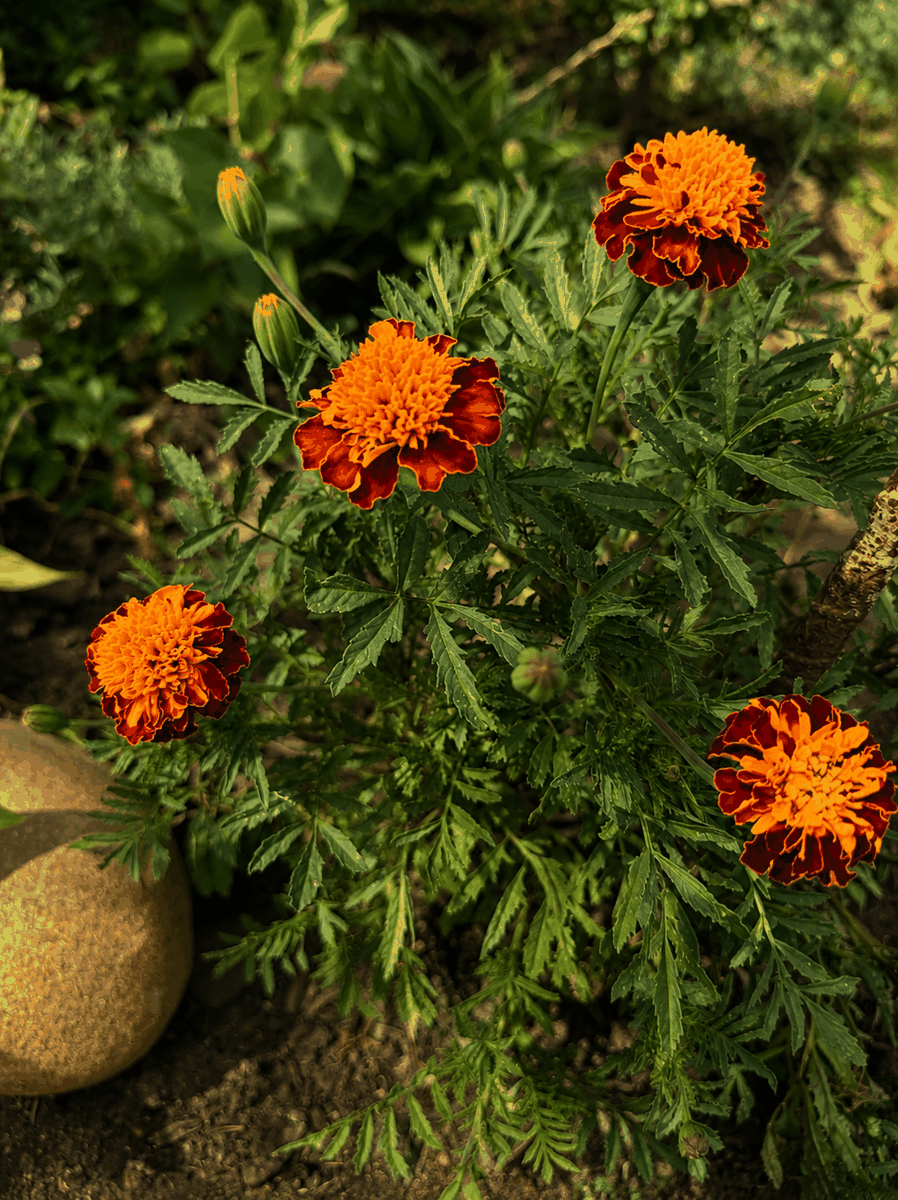
Tagetes species are aromatic annuals with divided, fernlike leaves and rounded flower heads in yellow, gold, orange, red, or bicolored forms. Flower shape ranges from simple daisy-like heads to densely doubled pompons. Their foliage has a strong distinctive scent when rubbed. Do not confuse Tagetes marigolds with Calendula officinalis, which is also called pot marigold but is a different genus.
Habitat & Growing Conditions
Marigolds are warm-season annuals that thrive in full sun and well-drained garden soil. They tolerate heat and short dry periods once established but flower best with regular watering. Deadheading encourages continued bloom until frost.
Benefits
Marigolds are valuable companion and pollinator plants. Their flowers contain carotenoid pigments, including lutein in some species and cultivars. Certain Tagetes species have also been studied for effects on plant-parasitic nematodes. Laboratory findings on extracts or essential oils do not establish that homemade marigold remedies treat human disease.
Traditional Medicinal Uses
Different Tagetes species have histories of traditional use for digestive, skin, and inflammatory complaints in several cultures. These uses vary by species and preparation, and modern human evidence is limited. Root & Brass records these traditions without treating garden marigold as a substitute for medical care.
Culinary Uses
Some correctly identified Tagetes species and cultivars are used as edible flowers or flavorings. Petals may be used sparingly as a colorful garnish or seasoning when the exact plant is known to be food-suitable and has not been treated with non-food-safe pesticides. Tagetes should never be substituted automatically for Calendula in a recipe.
Folklore & Magical Associations
In modern folk-magic and garden traditions, marigold is commonly associated with protection, solar energy, courage, remembrance, prosperity, and honoring the dead. Its bright gold and orange flowers are often used symbolically in altar work, seasonal arrangements, protective charms, and remembrance practices. These associations are cultural and spiritual traditions rather than medical properties.
Harvesting
Pick newly opened, undamaged flower heads after dew has dried. Use only unsprayed plants and leave plenty of blooms for pollinators. Confirm the exact Tagetes species or cultivar before any culinary use.
Preparation & Preservation
For drying, separate clean petals or leave small heads whole and dry with good airflow away from direct sunlight. For culinary work, use only a positively identified edible variety. Concentrated essential oils are not interchangeable with petals and should not be used internally as a homemade remedy.
Safety & Cautions
Tagetes is not interchangeable with Calendula officinalis. Sap, flowers, and especially concentrated essential oils may irritate sensitive skin or trigger contact dermatitis. Some Tagetes extracts and essential oils can be phototoxic, so concentrated preparations should not be placed on skin before sun exposure. People sensitive to plants in the Asteraceae family should use extra caution. Do not ingest essential oil, and do not use medicinal-dose preparations during pregnancy, breastfeeding, childhood, or with medications without qualified guidance.
My Notes
Marigolds are grown in the Root & Brass garden every year for their long bloom season, vivid color, pollinator value, harvestable petals, and strong place in seasonal and magical garden traditions.
Also known as Milk Thistle, Marian Thistle, St. Mary's Thistle
✦
Plant TypeAnnual or biennial thistle
Parts UsedMature fruits/seeds are the principal medicinal part; leaves and other tender portions have historical food uses
Identification
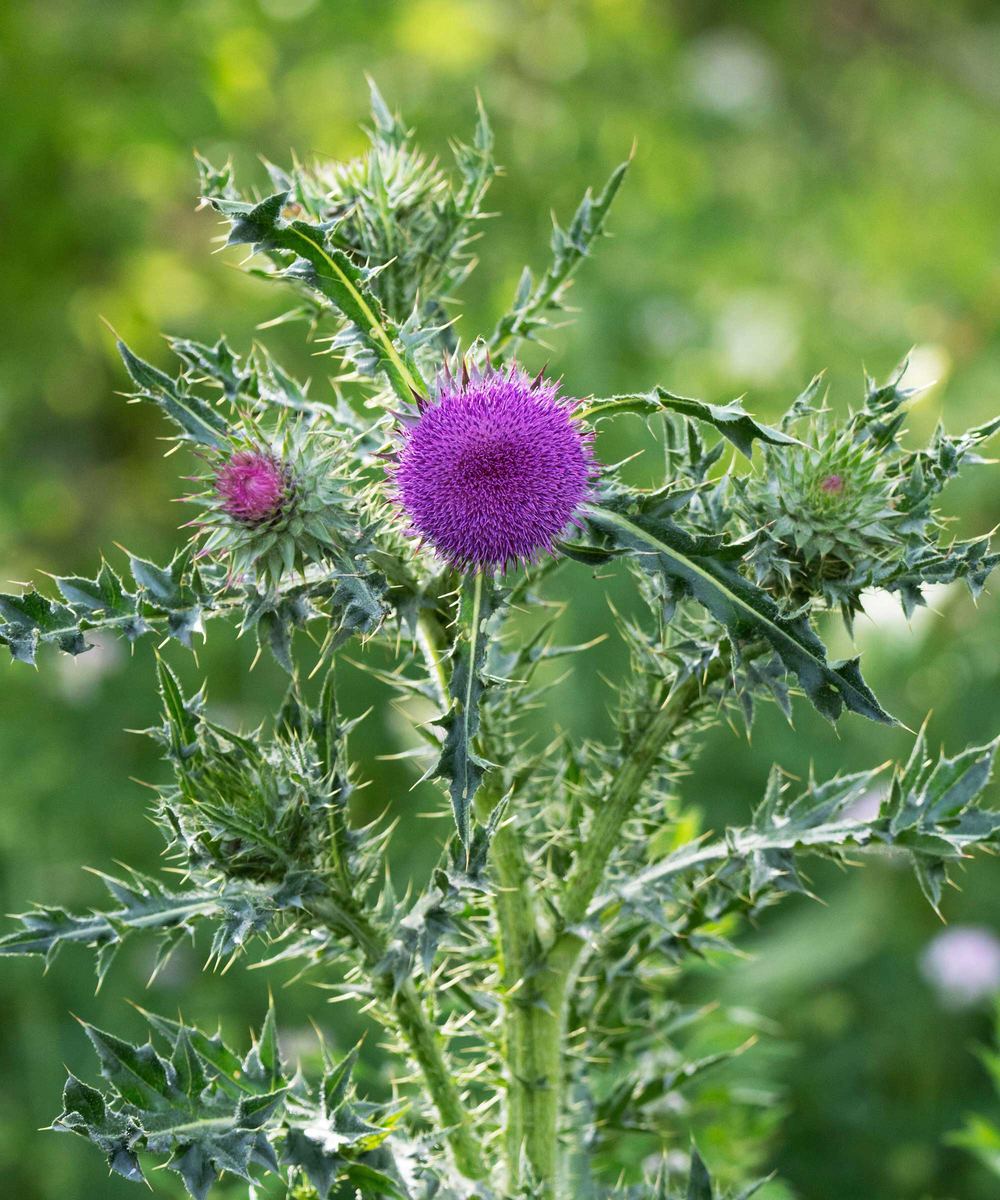
Milk thistle forms a large basal rosette of broad, shiny green leaves marked with distinctive white marbling along the veins. Leaf margins are deeply lobed and armed with sharp yellowish spines. Mature plants can become tall and branched, producing large purple flower heads surrounded by very spiny bracts. The white-veined leaves are one of its most recognizable features.
Habitat & Growing Conditions
Milk thistle prefers open, sunny, disturbed ground and well-drained soil. It commonly appears along roadsides, field margins, waste ground, vacant lots, and other places where soil has been disturbed. Once established it can tolerate dry conditions well.
Benefits
The mature fruits, often called seeds, contain a mixture of flavonolignans known collectively as silymarin. Milk thistle has a long history of use for digestive complaints and for supporting liver function. Modern research has studied silymarin for liver disease, metabolic conditions, and other uses, but clinical results are mixed and there is not enough high-quality evidence to conclude that milk thistle treats liver disease or other health conditions. The plant also provides nectar and pollen for insects while in bloom.
Traditional Medicinal Uses
Traditional European herbal medicine uses milk thistle fruit for digestive discomfort, fullness, and indigestion, and historically for support of liver function after serious disease has been excluded. Modern supplements are usually standardized extracts of the fruit rather than simple garden preparations. Human clinical trials for hepatitis, fatty liver disease, alcohol-related liver disease, and other liver conditions have produced conflicting or limited results, so this plant should be recorded as a traditional and researched herb rather than a proven liver treatment.
Culinary Uses
Historical food use includes young leaves, stalks, roots, and flower bases after careful removal of the spines. Because mature plants are extremely spiny and identification matters, this garden record treats food use as historical reference rather than a routine kitchen recommendation.
Folklore & Magical Associations
In European folk tradition, milk thistle is associated with protection, resilience, strength, purification, and boundaries. Its sharp spines make it a natural symbolic plant for warding and defensive work, while the white-veined leaves have inspired Marian folklore connected with protection and nourishment. These associations are spiritual and folkloric rather than medical effects.
Harvesting
Wear sturdy gloves and long sleeves because the leaves and flower bracts are sharply spined. For seed harvest, allow flower heads to mature until the heads dry and the seed tufts begin to loosen, then cut the heads into a paper bag and finish drying them in a dry, well-ventilated place. Separate the fruits from chaff only after they are fully dry. Harvest only from unsprayed plants away from contaminated roadsides or treated ground.
Preparation & Preservation
Commercial medicinal preparations commonly use dried, powdered fruit or standardized extracts containing measured amounts of silymarin. A homemade tea is not equivalent to a standardized extract because silymarin is poorly extracted in water. For this apothecary, dried fruits can be stored whole in a labeled airtight container in a cool, dark, dry place. Avoid improvising concentrated extracts or copying supplement doses into homemade preparations.
Safety & Cautions
Milk thistle may cause digestive upset such as nausea, bloating, or gas and can trigger allergic reactions, especially in people sensitive to ragweed, chrysanthemums, marigolds, daisies, or other members of the Asteraceae family. Drug interactions are possible, so medicinal use should be discussed with a pharmacist or clinician when prescription medicines are involved. Safety during pregnancy and breastfeeding is not well established. Supplements can also vary significantly in purity and silymarin content. The plant itself is very spiny, so gloves are advisable during harvest.
My Notes
Classified as a weed in the Root & Brass garden but retained in the Apothecary because of its long herbal history and the well-studied silymarin compounds in its mature fruits.
Sources & References
NIH National Center for Complementary and Integrative Health — Milk Thistle: Usefulness and Safety.
European Medicines Agency — Silybi mariani fructus, European Union herbal monograph and assessment materials.
Royal Botanic Gardens, Kew — Plants of the World Online: Silybum marianum.
The Plant Cabinet
❧
Mint
Mentha spp.
Also known as Garden Mint
✦
Plant TypeHerbaceous perennial herb
Parts UsedYoung leaves and tender stems; flowering tops after species confirmation
Identification
Stems: Square in cross-section, a hallmark of the mint family.
Leaves: Opposite, aromatic, and usually toothed; scent varies greatly by species and cultivar.
Flowers: Small clustered flowers, often lavender, pink, or white, produced in summer.
Species warning: The journal currently records Mentha only to genus. Peppermint evidence applies to Mentha × piperita, not automatically to every mint. Identify the plant before medicinal use and specifically rule out pennyroyal (Mentha pulegium).
Habitat & Growing Conditions
Garden setting: A spreading perennial herb for full sun to partial shade.
Soil: Grows most vigorously in consistently moist, reasonably fertile soil.
Containment: Rhizomes travel aggressively; containers or buried barriers help keep it from overtaking neighboring beds.
Benefits
Digestive tradition: Peppermint leaf preparations are traditionally used for indigestion and flatulence.
Clinical distinction: Enteric-coated peppermint oil has evidence for reducing some irritable-bowel symptoms, but a tested capsule is not equivalent to garden tea or homemade essential oil.
Everyday value: Correctly identified culinary mints make pleasant aromatic teas and can help make hydration more appealing.
Traditional Medicinal Uses
Once the garden species is confirmed, the leaves may be recorded for traditional digestive use. Peppermint tea is generally milder than concentrated oil and is commonly used after meals for flavor and comfort.
No medicinal claim should be transferred to this plant solely because it smells minty. Species identity and preparation strength matter.
Culinary Uses
Fresh leaves can flavor tea, water, fruit, salads, sauces, desserts, and savory dishes. Culinary use is the safest starting point after the species has been positively identified.
Harvesting
Snip clean stems before or as flowering begins, when the foliage is strongly aromatic.
Harvest above a leaf node to encourage branching.
Use only unsprayed growth and inspect leaves carefully for mint rust or mildew.
Preparation & Preservation
Leaf infusion: Bruise a few clean leaves and steep in hot water for a mild culinary tea.
Drying: Hang small bundles or spread leaves in a thin layer away from direct sun; store only when crisp.
Essential oil: Distilled oil is highly concentrated. Do not improvise internal dosing or apply it undiluted.
Safety & Cautions
Confirm the species. Pennyroyal oil can cause severe liver injury, organ failure, pregnancy loss, and death; it must not be treated as ordinary garden mint.
Peppermint may worsen reflux or heartburn. People with gallstones or other biliary disorders should seek medical guidance before medicinal use.
Never apply peppermint oil or menthol preparations to the face of an infant or young child; inhaled menthol can interfere with breathing.
Medicinal-dose safety during pregnancy and breastfeeding is uncertain. Large or concentrated preparations may also interact with medicines.
Also known as Wild Chamomile, Disc Mayweed, Rayless Mayweed
✦
Plant TypeAnnual herb
Parts UsedFlower heads and young leaves; sometimes the flowering aerial parts
Identification
Flower heads: Small, rounded to cone-shaped yellow-green buttons with
no white ray petals. This petal-free head is one of the clearest
distinctions from German chamomile.
Habitat & Growing Conditions
Habit: A low, branching annual that favors open, disturbed ground.
Benefits
Aromatic edible: Clean flower heads and young leaves can add a
pineapple-chamomile fragrance to teas and seasonal foods.
Traditional Medicinal Uses
Pineapple weed has a history of use as a tea or tincture for digestive
cramping, discomfort, inflammation, and restlessness. Indigenous North
American ethnobotanical records also describe varied cultural and practical
uses, including insect repellent.
Culinary Uses
Flower-head tea: The fresh or dried rayless flower heads make a mild,
fruity infusion reminiscent of chamomile.
Folklore & Magical Associations
In contemporary folk practice, pineapple weed is often read as a
Harvesting
Harvest only after a confident identification, preferably while the
yellow-green flower heads are fresh and strongly fragrant.
Preparation & Preservation
Fresh infusion: Rinse carefully and steep a few flower heads in hot
water for 5–10 minutes. Begin with a weak culinary infusion to assess taste
and tolerance.
Safety & Cautions
Positive identification is essential. Pineapple weed should have rayless
yellow-green button heads, finely divided leaves, and a pineapple-like scent
when crushed. Do not consume a plant based on a photograph or scent alone.
Parts UsedLeaves, aerial parts, and historically the dried latex
Identification
Lactuca serriola typically forms a rosette before sending up a tall branching stem. Leaves are alternate, often deeply lobed, and have a distinctive row of prickles along the underside of the central midrib. Broken leaves or stems release white milky latex. Small pale-yellow flower heads form in branched clusters and later produce tufted wind-dispersed seeds. Correct identification matters because prickly lettuce can be confused with sowthistles and other Lactuca species.
Habitat & Growing Conditions
Frequently found in disturbed ground, vacant lots, roadsides, field edges, gardens, and waste places. It tolerates sun, heat, and relatively dry conditions once established and spreads readily by wind-carried seed.
Benefits
Prickly lettuce has a long history of traditional herbal use, particularly in preparations associated with calming, sleep, coughs, and digestive or spasmodic complaints. Laboratory and animal research has examined some of its constituents, but reliable human clinical evidence is limited. It is best documented in the Apothecary as a traditional-use plant rather than as a proven medicine.
Traditional Medicinal Uses
Traditional references describe prickly lettuce as having been used as a sedative, hypnotic, cough suppressant, expectorant, demulcent, antispasmodic, diuretic, and purgative. These uses come largely from historical and folk practice. Modern evidence in humans is insufficient to establish effectiveness or safe medicinal dosing, so concentrated or internal medicinal use should be approached cautiously.
Culinary Uses
Young leaves have sometimes been eaten as a bitter wild green, but they become increasingly bitter and tough as the plant matures and latex production increases. Because species identification and individual sensitivity matter, prickly lettuce is better treated primarily as an apothecary study plant rather than a routine edible. Do not harvest from sprayed or contaminated sites.
Folklore & Magical Associations
Modern folk and magical practice sometimes associates wild lettuces with rest, dream work, quieting, boundaries, and release because of their historical connection with sleep and calming preparations. These associations are cultural or spiritual rather than evidence of a medical effect.
Harvesting
If recording or harvesting for study, collect only positively identified, unsprayed plants from clean ground. Young leaves are easiest to handle before bolting. Historical preparations sometimes used the milky latex from mature plants, but concentrated latex should not be treated as a casual home remedy because potency and safety are poorly standardized.
Preparation & Preservation
For reference collections, leaves or aerial parts may be dried in a single layer with good airflow and stored only when fully dry. Historical sources describe dried latex preparations, but home preparation of concentrated latex is not recommended because composition and strength can vary considerably. Label all retained material clearly with species, plant part, location, and date.
Safety & Cautions
Human safety data for medicinal use of Lactuca serriola are limited, and there is no well-established safe therapeutic dose. Avoid concentrated preparations, especially dried latex, without qualified guidance. Use extra caution with sedatives, sleep medicines, alcohol, or other substances that depress the central nervous system because traditional use suggests sedating effects, even though interaction data are limited. Avoid medicinal use during pregnancy or breastfeeding because safety is not established. Prickly lettuce belongs to the Asteraceae family and may cause reactions in people sensitive to related plants. Correct identification is essential, and roadside or chemically treated plants should never be used internally.
My Notes
Keep prickly lettuce in the Weeds group so it does not appear in the Plant Journal. If it is retained for Apothecary study, record exact growing location, identification features, whether the site has been treated, and observations about bitterness, latex, flowering, and reseeding.
Sources & References
Awan AA et al. Anti-oxidant and hepatoprotective effects of Lactuca serriola and its phytochemical screening by HPLC and FTIR analysis. Pakistan Journal of Pharmaceutical Sciences, 2020.
North Carolina Extension Gardener Plant Toolbox, Lactuca / Wild Lettuce.
The Plant Cabinet
❧
Raspberry
Rubus idaeus
Also known as Red Raspberry, Raspberry Leaf
✦
Plant TypePerennial fruiting bramble
Parts UsedRipe berries; leaves only when positively identified and intentionally gathered
Identification
Canes: Upright to arching, usually with small prickles; new and fruiting canes differ in color and texture.
Leaves: Compound leaves with toothed margins and a distinctly pale or silvery underside.
Fruit: Aggregate red berries that pull away from the receptacle, leaving a hollow center.
Look-alikes: Confirm the bramble by leaves, canes, flowers, and hollow-centered ripe fruit before harvesting medicinal leaf.
Habitat & Growing Conditions
Garden setting: A perennial fruiting bramble grown in full sun.
Soil: Performs best with well-drained soil and consistent moisture during flowering and fruit development.
Growth: Biennial canes emerge from a perennial crown and require regular thinning and support.
Benefits
Recognized traditional use: Raspberry leaf is recorded for minor menstrual cramps, mild mouth or throat inflammation, and mild diarrhea.
Astringent action: Leaf tannins help explain its traditional use as a gargle or short-term digestive tea.
Evidence limit: These uses are based on longstanding traditional experience rather than strong clinical trials.
Traditional Medicinal Uses
Dried raspberry leaf may be recorded as a traditional astringent herb. A cooled infusion has been used as a gargle for minor mouth or throat irritation, while oral preparations have a traditional role in mild, short-lived diarrhea and menstrual spasm.
Raspberry leaf should not be used to delay evaluation of severe pain, heavy bleeding, dehydration, persistent diarrhea, or infection.
Culinary Uses
Fully ripe berries are nutritious foods rich in fiber and polyphenols. This entry keeps ordinary fruit consumption separate from medicinal leaf preparations.
Harvesting
Gather healthy, unsprayed leaves before fruiting or from non-fruiting lateral growth without stripping a cane.
Wear gloves around prickles and avoid leaves marked by rust, mildew, or chemical spray.
Dry leaves quickly in a thin layer with strong airflow.
Preparation & Preservation
Infusion: Use fully dried leaf for a mild tea or cooled gargle; strain fine leaf hairs carefully.
Storage: Keep dried leaf airtight, labeled, and away from light and moisture.
Do not assume a pregnancy tea blend is appropriate merely because raspberry leaf is traditional.
Safety & Cautions
Despite its reputation as a pregnancy herb, EMA assessment states that safety data are insufficient and medicinal use during pregnancy is not recommended without obstetric guidance.
Seek medical care for diarrhea with blood, black stool, fever, severe pain, dehydration, or symptoms lasting more than a short period.
Ask a clinician before medicinal use while breastfeeding, for children, or with chronic disease or prescription medicines.
Parts UsedLeaves and flowering aerial parts after species confirmation
Identification
Leaves: Tiny, opposite, aromatic leaves on slender woody or semi-woody stems.
Flowers: Small pink, lavender, or white flowers clustered near stem tips.
Species note: The medicinal monograph applies specifically to Thymus vulgaris and T. zygis. The journal currently lists Thymus to genus, so identify the exact species before medicinal use.
Habitat & Growing Conditions
Garden setting: A low evergreen perennial herb or groundcover for full sun.
Soil: Requires sharp drainage and tolerates dry conditions once established.
Season: Small flowers appear from late spring into summer and are valuable to pollinators.
Benefits
Traditional respiratory use: Thyme herb is recognized as a traditional expectorant for a cough associated with an ordinary cold.
Aromatic compounds: Thymol and carvacrol contribute to the characteristic scent and laboratory antimicrobial activity.
Evidence limit: Traditional recognition does not mean thyme cures respiratory infection, and laboratory antimicrobial findings do not justify treating infection with tea or oil.
Traditional Medicinal Uses
Correctly identified T. vulgaris or T. zygis leaves and flowering tops may be recorded for traditional short-term use in a chesty cough accompanying a cold. A warm leaf infusion is milder than essential oil and can also serve as a soothing culinary drink.
Thyme is not a treatment for pneumonia, asthma attack, influenza, whooping cough, or breathing difficulty.
Culinary Uses
Leaves season vegetables, beans, soups, breads, meats, and sauces. Normal culinary use is distinct from concentrated medicinal extracts or essential oil.
Harvesting
Clip unsprayed stems just before or as flowering begins.
Never remove more than a modest portion of a woody crown at once.
Dry small sprigs with excellent airflow, then strip leaves after they are crisp.
Preparation & Preservation
Leaf infusion: Steep clean fresh or dried leaves in hot water for a mild aromatic tea; strain before drinking.
Dry storage: Store leaves airtight away from heat and light.
Essential oil: Do not ingest homemade or undiluted thyme oil. Concentrated oil is chemically and toxicologically different from culinary leaf.
Safety & Cautions
Avoid medicinal use with allergy to thyme or other Lamiaceae-family plants.
Safety during pregnancy and breastfeeding has not been established; medicinal use is not recommended without professional guidance.
Seek medical care for shortness of breath, wheezing, chest pain, high fever, bloody or rust-colored mucus, dehydration, or a persistent or worsening cough.
Consult a pediatric clinician before using medicinal thyme for a child.
Parts UsedTraditionally flowers, leaves, and sometimes roots, depending on species and tradition
Identification
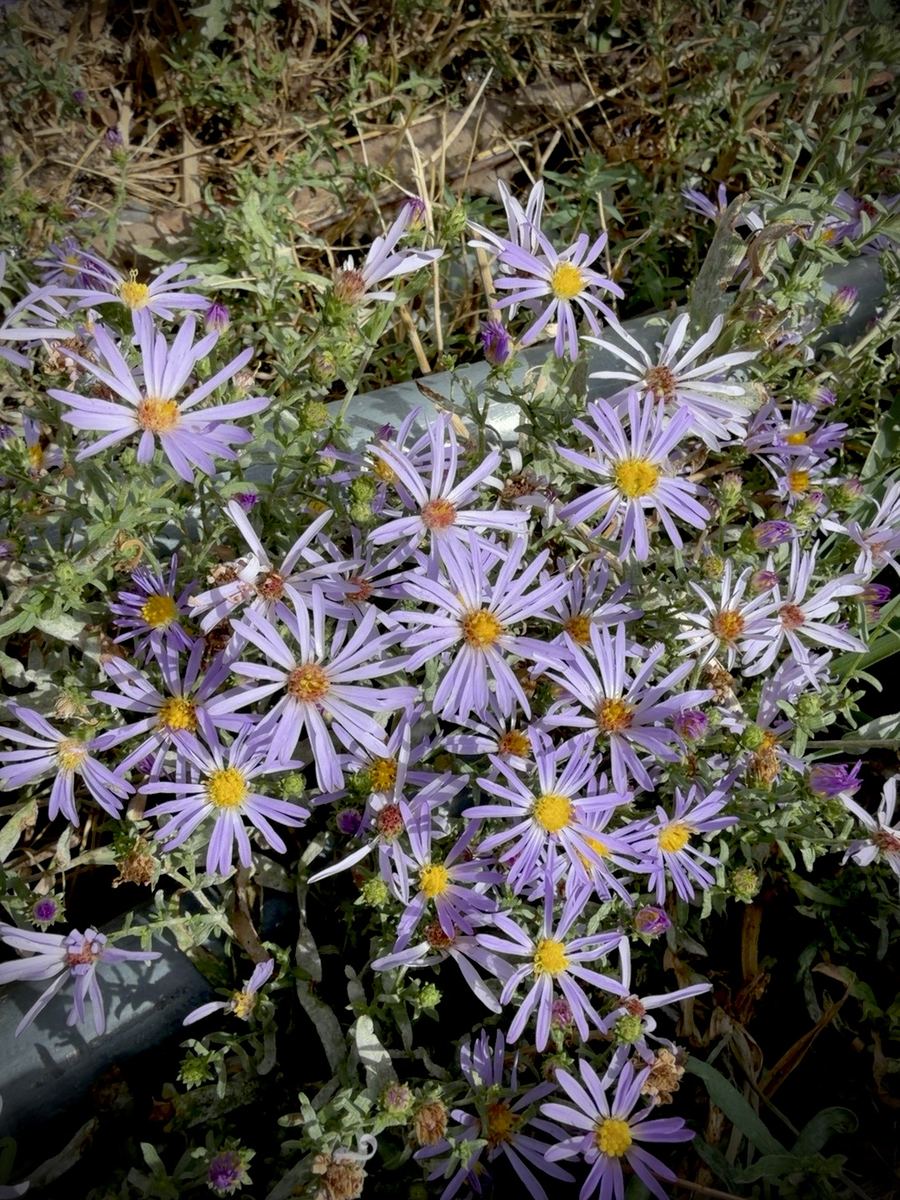
Observed plant has numerous lavender-purple, narrow ray flowers surrounding yellow disk centers and blooms in clusters. Foliage appears narrow and alternate. Identification from the garden photograph supports Symphyotrichum (aster), but the exact species should be confirmed from close views of the stem, leaf attachment, leaf surfaces, and flower bracts before medicinal use.
Habitat & Growing Conditions
Asters in the genus Symphyotrichum occur in a wide range of open habitats including meadows, roadsides, disturbed ground, field edges, and garden margins. This plant is growing voluntarily on the property and is treated as a weed in this garden.
Benefits
Asters are important late-season pollinator plants. Various North American aster species also have histories of traditional herbal use, especially in preparations associated with respiratory complaints and topical applications. Traditional use should not be treated as proof of clinical effectiveness, and species-specific evidence is limited.
Traditional Medicinal Uses
Ethnobotanical records document traditional use of several native North American asters for respiratory complaints such as coughs and congestion, and some species have been used externally in washes or poultices. Because this plant has not been identified to species, no species-specific medicinal recommendation is made here. Confirm the exact species before preparing it for internal or medicinal use.
Culinary Uses
Not recorded here as a food plant. Edibility and traditional food use vary among species, and this specimen should not be eaten until its exact identity is confirmed.
Folklore & Magical Associations
In modern folk and magical practice, asters are commonly associated with patience, love, protection, remembrance, transition, and the wisdom of late-season change. Their autumn flowering makes them a natural symbol of endurance and carrying beauty into the closing part of the growing year. These are folkloric associations rather than medical claims.
Harvesting
For a positively identified species, aerial parts are generally gathered while healthy and in flower. Harvest only from plants free of herbicide, pesticide, roadside contamination, and animal waste. Leave substantial flowering growth for pollinators and seed production.
Preparation & Preservation
Traditional preparations of identified aster species have included teas, washes, poultices, and dried herb. Because the exact species of this garden plant remains unconfirmed, preserve this information as ethnobotanical reference rather than preparation instructions for use.
Safety & Cautions
Exact species identification is required before medicinal or edible use. Members of the aster family can cause allergic reactions in people sensitive to Asteraceae plants such as ragweed, chrysanthemums, daisies, or echinacea. Evidence for safety, dosing, drug interactions, pregnancy, and breastfeeding is limited and varies by species. Do not infer that traditional use of one Symphyotrichum species applies to another.
My Notes
Growing voluntarily on the property and treated as a weed here. Photograph taken from the garden shows abundant pale lavender-purple flowers with yellow centers. Keep in the Apothecary as an identification and ethnobotanical record; confirm exact species before any medicinal use.
Sources & References
USDA PLANTS Database and regional floras for Symphyotrichum identification and distribution. Native American Ethnobotany database (University of Michigan-Dearborn) for documented traditional uses of individual aster species. Species identification remains provisional pending closer examination.
The Plant Cabinet
❧
Yarrow
Achillea millefolium
Also known as Common Yarrow
✦
Plant TypeHardy herbaceous perennial
Parts UsedLeaves and flowering tops
Identification
Yarrow usually grows in clumps of upright stems with deeply divided, feathery leaves that have a strong herbal scent when crushed. Flower heads are arranged in dense, flat-topped clusters and are commonly white, cream, pale pink, or deeper cultivated colors. Confirm identification carefully because members of the carrot family can be dangerous lookalikes from a distance, though yarrow foliage and flower structure differ on close inspection.
Habitat & Growing Conditions
Achillea millefolium is widespread across temperate regions of the Northern Hemisphere and commonly grows in meadows, roadsides, open fields, disturbed ground, and dry sunny sites. It tolerates lean soil, cold winters, and drought once established.
Benefits
Yarrow is valuable as a drought-tolerant perennial, pollinator plant, cut flower, and traditional herbal species. It attracts beneficial insects, tolerates difficult growing conditions, and has a long history of use in folk preparations for minor skin concerns and digestive complaints. Modern clinical evidence is limited, so traditional uses should not be treated as proven disease treatments.
Traditional Medicinal Uses
Yarrow has traditionally been used externally for minor cuts, abrasions, bruises, and irritated skin, and internally as a bitter or digestive herb and in preparations for colds and fever. Evidence from modern clinical research is limited. Home use should be restricted to minor concerns, and serious wounds, infection, persistent bleeding, or significant illness require professional care.
Culinary Uses
Young leaves have been used in small amounts as a bitter, aromatic herb and older traditions include yarrow in beverages. The flavor is strongly bitter and resinous, so culinary use is usually modest. Only correctly identified, uncontaminated plant material should be used.
Folklore & Magical Associations
In European folk and modern magical traditions, yarrow is associated with protection, courage, boundaries, healing, love, divination, and warding. It appears in charms, protective bundles, ritual baths, and divination practices. These are cultural and spiritual associations rather than medical effects.
Harvesting
Harvest only correctly identified, unsprayed plants from clean ground. For flowering tops, cut healthy stems when most of the flower cluster is freshly open and dry after morning dew has evaporated. Leaves may be gathered earlier in the season when young and clean.
Preparation & Preservation
Dried flowering tops and leaves are commonly used in teas, washes, compresses, infused oils, and salves. Label every preparation with plant name, plant part, harvest date, and intended use.
Safety & Cautions
Yarrow belongs to the Asteraceae family, so people allergic to ragweed, chrysanthemums, daisies, marigolds, or related plants may react. Skin contact can occasionally cause irritation or increased sun sensitivity. Internal medicinal use during pregnancy is generally avoided because safety is uncertain. Yarrow may theoretically interact with anticoagulant or antiplatelet drugs and other medications. Avoid using concentrated preparations without professional guidance if pregnant, breastfeeding, taking medications, or managing a medical condition. Never harvest from roadsides, sprayed areas, or contaminated ground.
My Notes
Yarrow is a strong fit for the Root & Brass garden because it combines cold hardiness, drought tolerance, pollinator value, apothecary use, and old-fashioned cottage-garden character. Record flower color, spread, winter survival, bloom length, drying results, and whether it behaves politely or decides to annex neighboring beds.
Sources & References
Royal Botanic Gardens, Kew, Plants of the World Online: Achillea millefolium.
European Medicines Agency (EMA), Achillea millefolium L., herba herbal monograph.
Missouri Botanical Garden Plant Finder: Achillea millefolium.